
How The American President Accidentally Predicted MAGA in 2025
Every so often, a movie scene resurfaces and hits you in a completely new way — kind of like when you revisit an old song and suddenly realize it was speaking truth you weren’t ready to hear. That’s precisely what happened when I rewatched the iconic Andrew Shepherd speech from Aaron Sorkin’s 1995 film, The American President.
Remember, Sorkin wrote Shepherd as the ideal Democrat — eloquent, principled, morally confident, patriotic, and unafraid of political heat.
But rewatching this scene in 2025?
Oh WOW - does it land differently.
Not only does Shepherd’s rhetoric sound nothing like the modern Democratic Party…
It sounds precisely like the America First, MAGA movement.
And ironically ,the current Democratic Party looks a whole lot like Shepherd’s political rival, Senator Bob Rumson: fear-based, accusatory, and allergic to real solutions.
Let’s break down why this ’90s movie monologue feels so MAGA today.
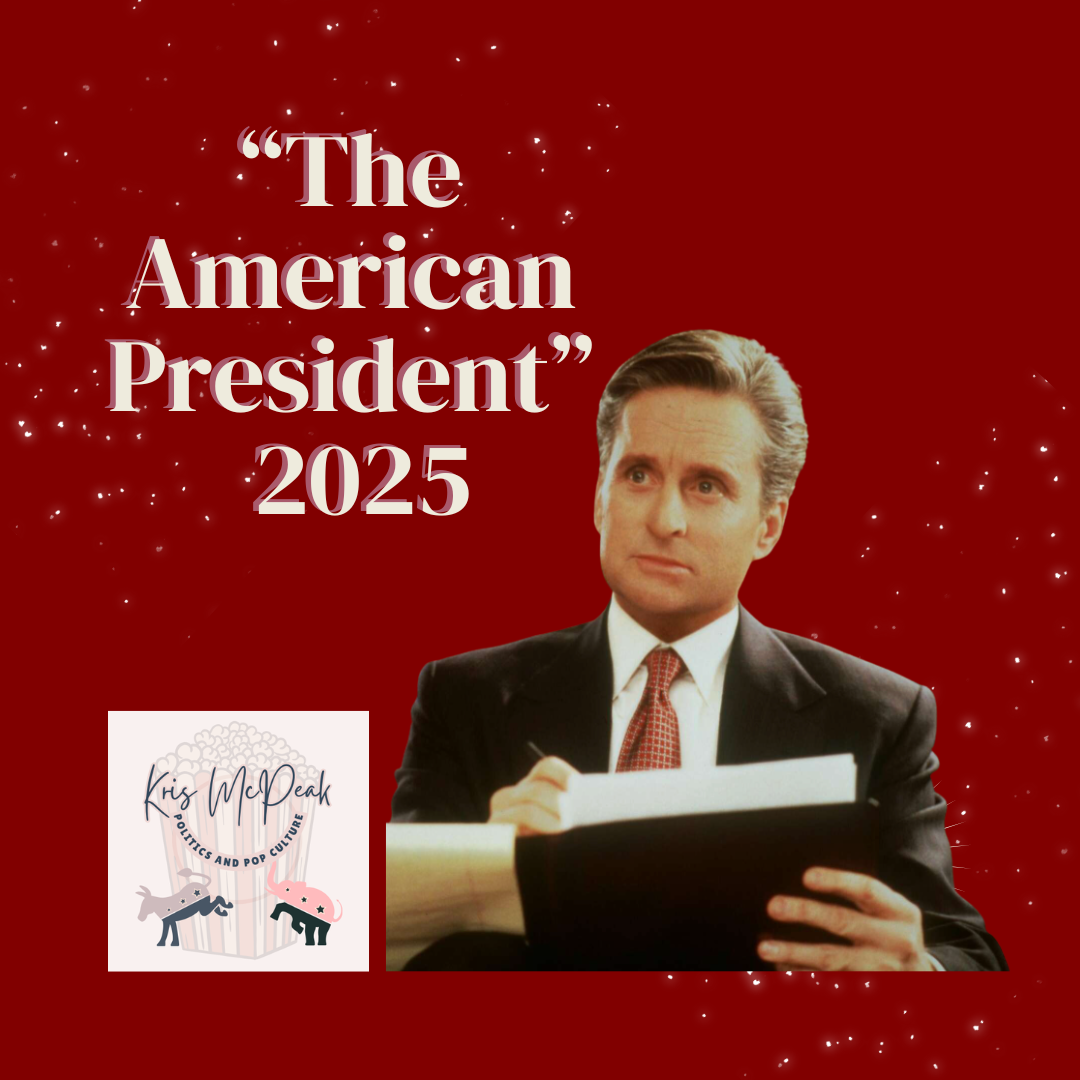
🇺🇸 1. “America Isn’t Easy. It’s Advanced Citizenship.”
Shepherd opens with a reminder: freedom requires responsibility, discipline, courage, and effort.
It’s not handed to you — you work for it.
And who says that today?
MAGA Republicans.
Trump, at a 2025 naturalization event, said:
“Citizenship is a privilege. Our rights come from God, and we fight to protect them.”
That is pure “advanced citizenship” energy.
It’s patriotic.
It’s rugged.
It’s about defending American values, not apologizing for them.
Meanwhile, today’s Democrats?
They’ve slid straight into Rumson territory — acting like Americans need more government control, more rules, more micromanagement. It’s not responsibility; it’s dependency.
🗣 2. “Defend the Speech That Makes Your Blood Boil.”
Shepherd argues that true free speech means protecting the harsh, uncomfortable, unpopular stuff.
And in 2025, it’s MAGA Republicans championing that principle.
JD Vance recently said:
“The First Amendment is not for the speech you already agree with — it’s for the speech you despise.”
Trump’s 2025 executive order echoed it too:
“Government censorship of speech is intolerable in a free society.”
Today’s Democrats?
They’re the ones policing speech online, censoring dissent, labeling opposing views as “dangerous.”
They’ve become Rumson — terrified of speech they can’t control.
🔥 3. Shepherd’s Warning About Fear Politics Is a Mirror Image of Today
Sorkin wrote Rumson as the politician who wins by scaring the public and pointing fingers.
But in 2025, that’s exactly the tactic Democrats use.
Their messaging is a nonstop panic reel:
“Democracy will die if Trump wins!”
“MAGA is extremism!”
“Speech we disagree with is a threat!”
That’s straight out of the Rumson playbook.
Fear + blame = power.
MAGA messaging, meanwhile, is closer to Shepherd’s tone:
Confident.
Solution-oriented.
Patriotic.
Optimistic.
The roles have reversed.
🔫 4. Shepherd’s Take-Charge Tone Sounds More Like Trump Than Today’s Democrats
Shepherd says the country can’t tackle crime without big, bold action.
MAGA Republicans use that same boldness — just applied differently.
Trump on Democrat-run cities:
“Weak leadership is fueling crime. We need strength, not excuses.”
Democrats hem and haw.
MAGA draws a line.
Shepherd drew a line.
The moral clarity is on the Right now.
🎭 5. “Rumson Isn’t Interested in Solving Problems.”
This hits hard in 2025.
Rumson represents the politician who:
spreads rumors
manufactures outrage
avoids real policy
makes everything about optics
Today, that’s the Democratic Party in a nutshell.
Trump captured the dynamic perfectly:
“They don’t come after me because I’m the problem.
They come after me because I’m standing between them and YOU.”
MAGA speaks to solutions.
Democrats speak to fear.
Rumson would feel right at home in their strategy rooms.
⭐️ Final Thought: Sorkin Accidentally Wrote the MAGA President
Here’s the plot twist Sorkin didn’t see coming:
The principled, patriotic, no-nonsense, bold, free-speech-defending president he wrote in 1995 looks a LOT more like Donald Trump in 2025 than any Democrat on the scene.
And the Democrats?
They’ve turned into the finger-pointing, fear-mongering, optics-obsessed Rumson.
Pop culture doesn’t just reflect politics — sometimes it predicts it.
Just not in the direction anyone expected.