
Self-Care After 50: Simple Ways to Make More Room for Yourself
By the time we reach our 50s, many of us have spent decades getting very good at caring for everyone and everything else. Work, family, relationships, responsibilities, deadlines, errands, appointments — the list rarely gets shorter on its own.
Self-care is not about becoming more indulgent or creating a perfect routine. It is about remembering that your own energy, comfort, interests, and well-being belong on the list, too.
The good news is that self-care doesn't have to be complicated, expensive, or time-consuming. In fact, some of the most helpful practices are the smallest ones.
Self-Care Is Not Another Job
Self-care should not become one more thing you are failing to “do right.”
At its simplest, self-care means paying attention to what helps you feel more grounded, rested, supported, or like yourself. That might mean taking a walk, saying no to something you do not have the energy for, spending ten quiet minutes with a book, calling a friend, coloring, journaling, taking a bath, or simply going to bed earlier than usual.
The point is not to create an impressive routine.
The point is to care for yourself.
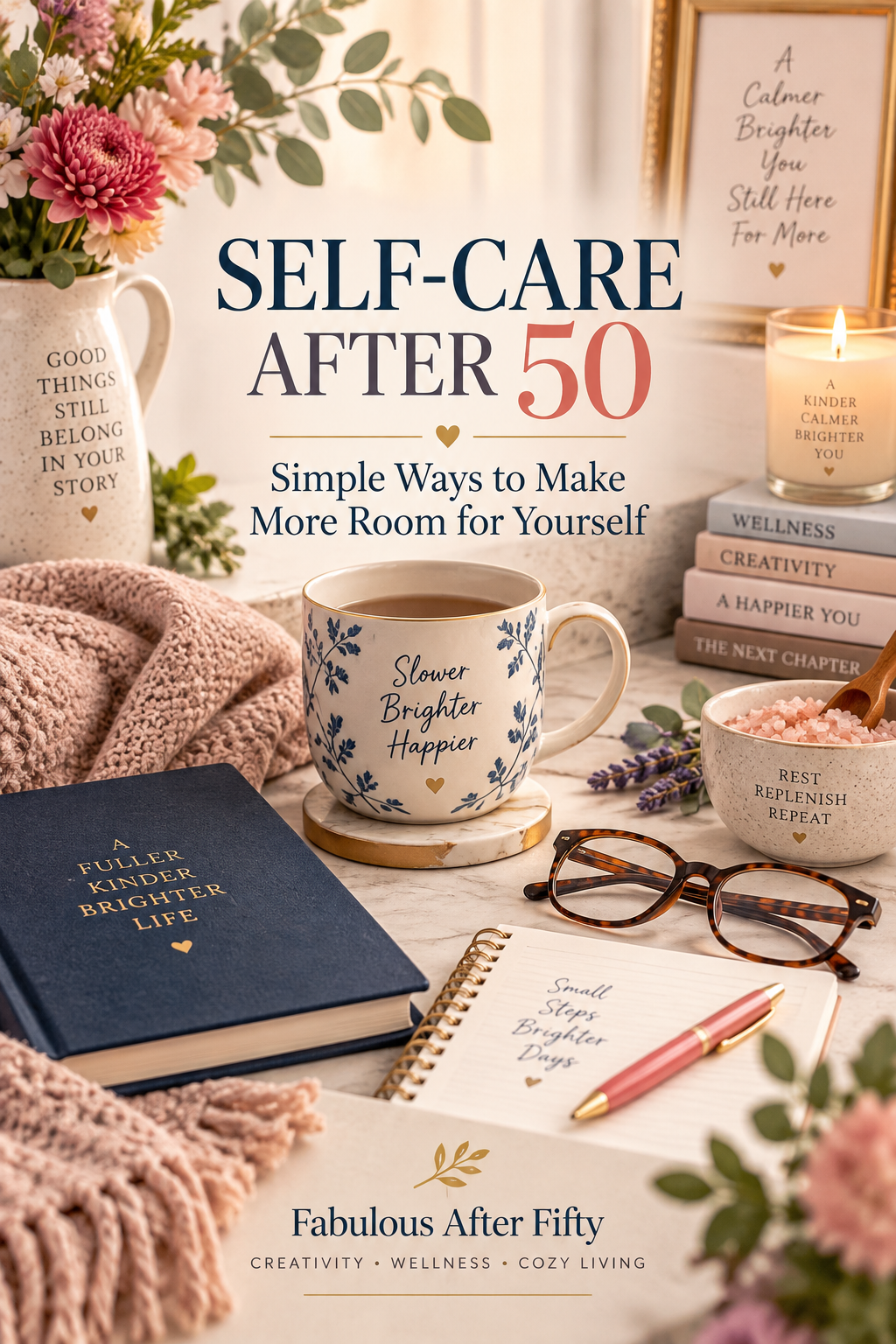
Start With What Actually Feels Good to You
One of the easiest ways to make self-care sustainable is to stop doing what you think should be relaxing and pay attention to what actually is.
Maybe you love a quiet morning with coffee before anyone else is awake. Maybe you feel better after being outside. Maybe you need time alone. Maybe you need connection. Maybe your version of self-care is knitting, reading, stretching, listening to music, working on a puzzle, or sitting on the patio doing absolutely nothing useful.
Make a simple list of things that reliably help you feel calmer, lighter, more energized, or more like yourself.
That list becomes your starting point.
Build Small Moments Into the Day You Already Have
You do not need to clear two hours from your calendar to take better care of yourself.
Try attaching a small practice to a part of the day that already exists.
You might:
write one sentence in a journal while you drink your morning coffee
step outside for five minutes after lunch
color for fifteen minutes before turning on the television
listen to music while you get ready for bed
read ten pages instead of scrolling for another half hour
make tea and sit somewhere quiet before the day begins
Small routines are easier to return to because they fit into real life.
And real life is the point.
Keep a Five-Item Self-Care Backup List
When life gets especially busy, stressful, or chaotic, even simple decisions can feel harder than usual. That is why it helps to decide ahead of time what your easiest forms of self-care are.
Create a short list of five things you can fall back on when you are depleted.
For example:
Go to bed early.
Eat something nourishing.
Take a short walk.
Call or text someone you trust.
Put your phone away and do something quiet for twenty minutes.
Your list does not need to be ambitious.
It needs to be usable.
Self-Care Does Not Have to Cost Anything
One of the biggest myths around self-care is that it requires shopping, spa appointments, or expensive routines.
Those things can be enjoyable, but they are not required.
Some of the best forms of self-care are free:
sitting outside
taking a nap
walking around the neighborhood
listening to a favorite playlist
rereading a book you love
stretching
journaling
talking to someone who makes you feel understood
turning off notifications for an hour
doing nothing without apologizing for it
Sometimes the most restorative thing you can give yourself is permission to stop being productive for a little while.
Let Go of the Guilt
For many women, guilt is one of the biggest barriers to self-care.
Many women hold a deeply ingrained belief that everyone else’s needs should come first, or that taking time for yourself is somehow selfish.
It is not.
Caring for yourself does not mean you care less about other people. It means you are including yourself among the people worth caring for.
That might look like setting a boundary, declining an invitation, asking for help, leaving something unfinished until tomorrow, or simply deciding that your energy matters.
There is no prize for running yourself completely empty.
Create a Small Comfort Kit
Self-care doesn't require buying things, but it can help to have a few comforts close at hand for the days when you need them.
Your version might include:
a favorite book
colored pencils or gel pens
a coloring book
tea or cocoa
bath salts
soft socks
a journal
a cozy blanket
a playlist you love
Think of it less as a “self-care kit” and more as a collection of easy reminders that you are allowed to slow down.
If you want ideas, you can explore some of my Everyday Care & Cozy Favorites for simple comforts that make quiet time feel a little more inviting.
Make It Flexible Enough to Survive Real Life
A routine only works if you can return to it.
Some days, your schedule will fall apart. Some weeks, your energy will be low. Sometimes the thing that used to help you no longer feels right.
That is normal.
Self-care is not a streak you have to maintain.
It is a practice you can come back to.
You are allowed to change what you need.
You are allowed to take a break.
You are allowed to start again.
A Gentle Place to Begin
If you are not sure where to start, choose one small thing.
Put your phone away for fifteen minutes.
Make a warm drink.
Go outside.
Color a page.
Read a few pages.
Write down one thing you need today.
That is enough.
Self-care after 50 does not have to be dramatic. Sometimes it is simply the decision to make a little more room for yourself in a life that has asked a lot of you.
And that room can become one of the best parts of the next chapter.
Looking for simple ways to make your quiet time more enjoyable?
Explore Everyday Care & Cozy Favorites for books, creative tools, relaxing extras, and small comforts that make slowing down feel easier.
Prefer creative self-care?
Browse the Cozy Coloring Collection for relaxing, screen-free coloring books designed for grown-up downtime.